
Engine Oil Contamination Explained: Causes, Sources, and How It Happens
Engine oil can become contaminated at two critical stages: during storage and distribution and while in use inside the vehicle. Understanding these contamination sources is essential for maintaining oil cleanliness, protecting engine components, and extending lubricant life.
Before reaching the engine, oil may pick up dirt, moisture, or debris during transportation and bulk handling. Tanker trucks, storage tanks, transfer lines, and dispensing systems are common entry points for contaminants, especially when equipment is not properly cleaned, sealed, or maintained. Poor storage conditions, such as exposure to temperature extremes, humidity, or unsealed containers, further increase contamination risk. Without proper pre-use filtration, these impurities are delivered directly into the engine, reducing lubrication efficiency and accelerating wear.
Once in operation, engine oil can also become compromised inside the vehicle. Internal factors such as metal wear particles, fuel dilution, coolant leaks, and oxidation introduce contaminants that degrade oil performance over time. If left unchecked, these impurities contribute to sludge formation, reduced lubrication, and premature mechanical failure.
By addressing both external (handling and storage) and internal (operational) sources of contamination, vehicle owners and maintenance teams can optimize engine performance, prevent costly repairs, and extend the life of both the engine and the lubricant.
Contamination from Handling and Distribution Systems
Oil contamination often occurs before the lubricant reaches the engine, introduced during transportation, storage, and dispensing. Even high-quality engine oil can be compromised if handling systems are not properly maintained.
Tanker Trucks
Tanker trucks used to transport lubricants can introduce contaminants when they are:
- Not thoroughly cleaned between loads, especially when hauling different products
- Exposed to residual water, fuel, or previous oils inside the tank
- Improperly sealed, allowing dust, moisture, or airborne debris to enter
Condensation caused by temperature changes during transit can also introduce water contamination—one of the most damaging impurities for lubricants.
Storage Tanks
Bulk storage tanks are a common source of contamination, particularly when:
- Tanks are not properly sealed or vented
- Moisture enters through breathers, hatches, or damaged gaskets
- Sediment accumulates due to infrequent cleaning
- Temperature fluctuations lead to internal condensation
Over time, rust, sludge, and microbial growth can develop inside storage tanks, degrading oil quality before it is ever dispensed.
Transfer Lines and Hoses
Oil transfer systems—including hoses, pipes, and pumps, can contaminate oil when:
- Lines are used for multiple lubricants without proper flushing
- Hoses degrade internally, shedding rubber or polymer particles
- Open connections allow dirt or moisture intrusion
- Incompatible materials react chemically with certain oils
Even small amounts of residue left inside transfer lines can cause cross-contamination that alters oil performance.
Dispensing Systems
Dispensing equipment such as pumps, meters, and nozzles can be a final contamination point if:
- Filters are missing, clogged, or poorly maintained
- Nozzles are left uncovered or exposed to the environment
- Containers are reused without proper cleaning
- Manual handling introduces dust, debris, or moisture
Without final-stage filtration, contaminants accumulated throughout the supply chain are delivered directly into engines or machinery.
Prevention Best Practices
- Filter oil upon receipt and before dispensing
- Use dedicated equipment for each lubricant type
- Seal all storage and dispensing components
- Regularly inspect and clean tanks, hoses, and pumps
- Store lubricants in controlled, dry environments
Is Your Engine Oil Contaminated Inside Your Vehicle? Here’s How to Diagnose It
Early detection of engine oil contamination is critical to maintaining engine performance and preventing internal damage. Diagnosis often begins with a simple visual inspection that can be performed at home.
Start by removing the dipstick and examining the oil’s color, consistency, and texture. Healthy engine oil should appear amber to dark brown and flow smoothly. Oil that appears excessively dark, thick, foamy, or milky may indicate contamination from fuel, coolant, or moisture. A strong burnt or acrid odor can signal oil degradation caused by overheating.
For a more precise evaluation, consider professional oil analysis. This process involves sending a small oil sample to a laboratory for testing. Oil analysis can detect metal particles, soot, fuel dilution, coolant leaks, and water contamination, issues often invisible to the naked eye. Most oil analysis services cost between $25 and $50, making them a cost-effective preventive maintenance tool.
Regular inspections and periodic oil analysis help identify problems early, extend engine life, and reduce the risk of expensive repairs.
The Most Common Oil Contaminants and Their Impact
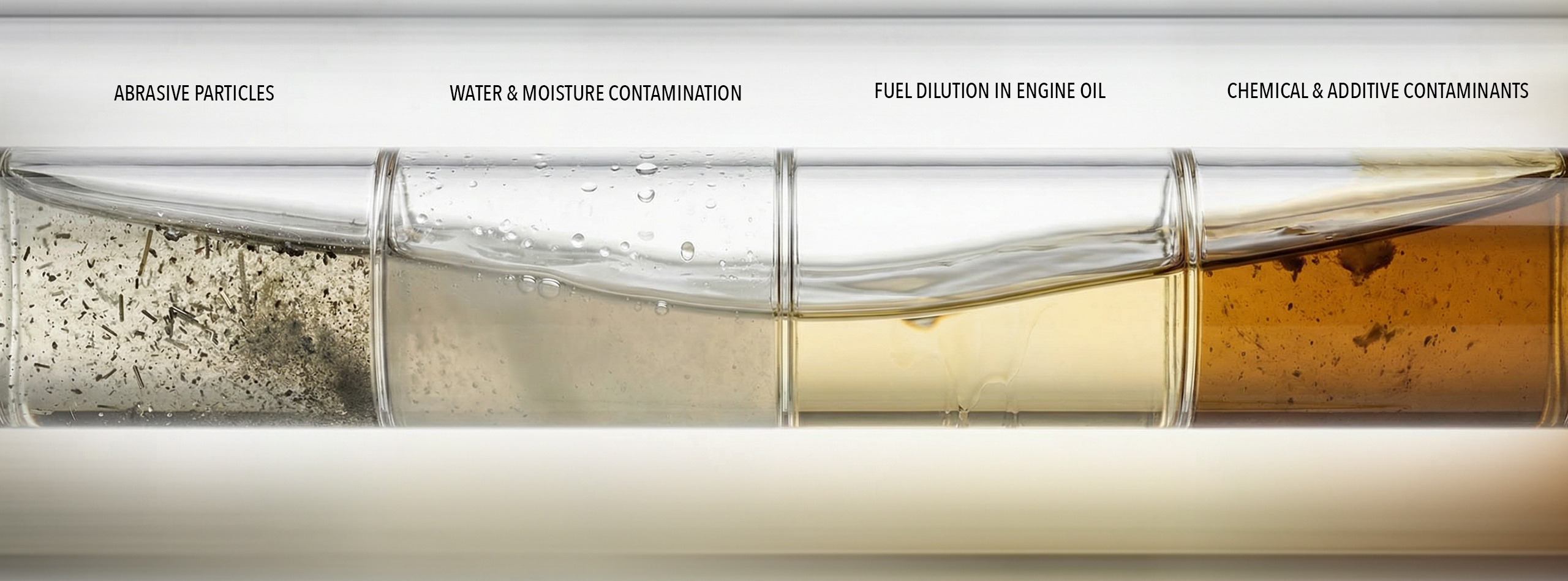
Engine oil can be compromised by several contaminants that reduce effectiveness and accelerate engine wear. Understanding these common contaminants is essential for maintaining engine performance and prolonging lubricant life.
Abrasive Particles
Abrasives are among the most damaging oil contaminants. These include dust, dirt, and metal particles introduced externally or generated internally. Dust and dirt may enter oil during handling, storage, or through unfiltered air entering the engine. Metal particles result from normal engine wear and from abrasives already present in the oil. Together, they increase friction, accelerate wear, and generate additional debris.
Water
Water contamination is one of the most common oil issues. It can originate from condensation during storage, environmental humidity, or incomplete combustion at low engine temperatures. Water promotes corrosion, accelerates wear, and reacts with additives to form acidic compounds that further damage engine components.
Fuel (Fuel Dilution)
Fuel dilution occurs when unburned fuel mixes with engine oil. This lowers oil viscosity, weakens the lubricating film, and reduces the effectiveness of protective additives. Fuel dilution can also increase oil consumption, leading to more frequent top-offs and higher maintenance costs.
Coolant
Coolant contamination typically indicates serious internal engine problems, such as a blown head gasket or cracked cylinder head. When coolant mixes with oil, it reduces viscosity, forms sludge, and severely compromises the oil’s protective properties. If left untreated, this contamination can result in catastrophic engine damage.
Best Practices to Keep Engine Oil Clean and Contamination-Free
Engine oil contamination reduces performance, increases wear, and leads to costly repairs. Fortunately, proper driving habits and routine maintenance significantly reduce contamination risk and extend engine life.
Follow these essential maintenance tips to keep your engine oil clean and effective:
- Drive Longer Distances to Reach Optimal Engine Temperature
Frequent short trips prevent the engine from fully warming up, allowing moisture and unburned fuel to accumulate. A 20–30 minute highway drive each week helps evaporate water and burn off fuel dilution.
- Use High-Quality Engine Oil and Oil Filters
Premium motor oils and high-quality filters provide superior protection against sludge, deposits, and oxidation. Advanced additive packages help suspend contaminants and resist thermal breakdown.
- Check Engine Oil Regularly for Contamination
Inspect the dipstick for signs such as a milky appearance, strong fuel odor, or unusual thickness. Early detection can prevent severe engine damage.
- Avoid Water Intrusion During Engine Bay Cleaning
High-pressure water can force moisture past seals and into sensitive components, increasing contamination risk. Professional cleaning is the safest option.
- Maintain Proper Oil and Coolant Levels
Low coolant levels can lead to overheating and head gasket failure, while low oil levels allow air and moisture intrusion. Both conditions accelerate sludge formation and engine wear.
Keep Your Engine Protected: Avoid Oil Contamination
Engine oil contamination is one of the leading causes of premature engine wear and costly repairs. From abrasive particles and water to fuel dilution and coolant leaks, contaminants can enter oil during storage, handling, or engine operation—reducing lubrication and accelerating damage.
Regular oil inspections, proper filtration, and preventive maintenance are your best defense. By staying proactive, you ensure your engine runs cleaner, longer, and at peak performance. Protect your investment, keep your oil pure, your engine strong, and your vehicle performing at its Ultra1Plus best.