
What Is High Mileage Motor Oil and When Should You Use It?
WHEN IS A VEHICLE CONSIDERED HIGH MILEAGE?
There’s no universal definition of “high mileage.” While 75,000 miles (121,000 km) is often used as a general benchmark, some experts consider vehicles with as little as 45,000 miles to fall into this category.
In reality, it depends on age, maintenance, and driving conditions. Many well-maintained vehicles can reach 200,000 miles or more, and modern engines are increasingly capable of exceeding 300,000–400,000 miles under proper care.
Traditionally, vehicles over 75,000 miles are labeled high mileage, but cars older than 7–8 years or those exposed to heavy use may experience similar engine wear. Over time, seals, gaskets, and other non-metal components naturally deteriorate, making high mileage oil beneficial even before reaching a specific mileage mark.
HIGH MILEAGE VS. REGULAR OIL: WHAT’S THE REAL DIFFERENCE?
The true advantage of high mileage oil lies in its advanced additive technology. While conventional motor oils are designed to protect engines under normal operating conditions, high mileage formulations are specifically engineered to meet the evolving needs of aging engines.
High mileage oils feature a specialized blend of seal conditioners, enhanced detergents, antioxidants, and anti-wear additives. This optimized formula helps rejuvenate aging seals, reduce leaks, minimize oil consumption, and combat sludge and deposit formation.
As engines accumulate miles, internal components naturally experience wear and material fatigue. High mileage oil is developed to address these changes, helping maintain compression, reduce friction, and extend engine life while preserving smooth, reliable performance.
In short, regular oil protects. High mileage oil protects, and restores, delivering targeted defense for engines that demand more.
WHEN SHOULD YOU CHANGE HIGH MILEAGE OIL?
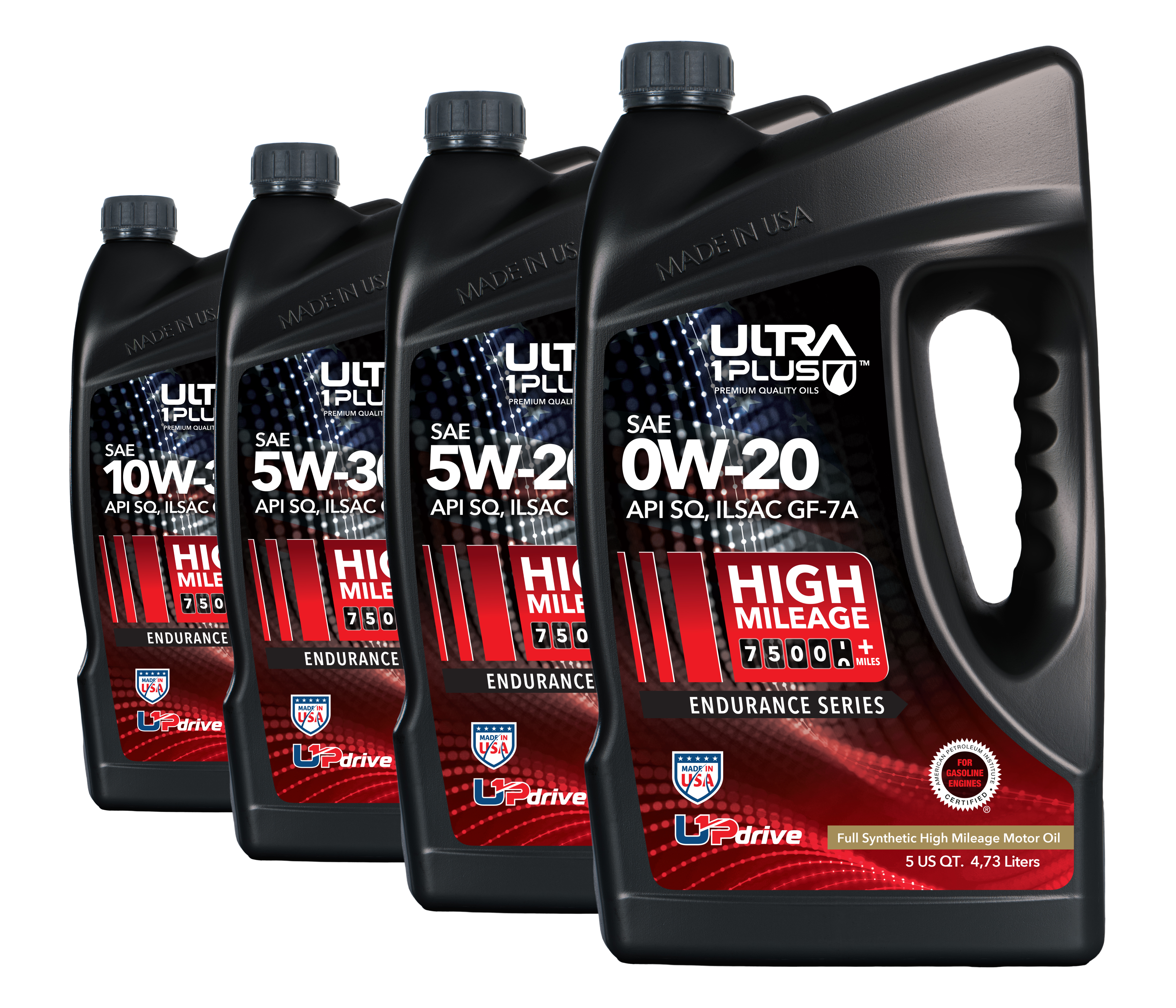
The recommended interval for changing high-mileage oil varies depending on the vehicle manufacturer, driving conditions, and the specific oil formulation used. As a general guideline, high-mileage oil should be replaced every 3,000 to 5,000 miles. Premium formulations, such as the new Ultra1Plus™ High-Mileage Series, may support extended service intervals under normal operating conditions. Always consult your vehicle’s owner’s manual or a qualified service professional to determine the appropriate maintenance schedule.
Failure to follow recommended oil change intervals can lead to performance and reliability issues. As engine oil ages, it gradually loses its lubricating properties, resulting in increased friction and component wear. Degraded oil may also contribute to sludge formation, which can restrict proper oil flow and reduce engine efficiency. Over time, neglecting routine oil changes can lead to significant engine damage and costly repairs.
Consistent oil maintenance is essential to preserving the performance, durability, and longevity of high-mileage engines.
FREQUENTLY ASKED QUESTIONS (FAQS)
At what mileage should I start using high-mileage oil?
Most manufacturers recommend switching to high-mileage oil once a vehicle reaches approximately 75,000 miles. At this stage, specialized formulations can help address the needs of aging engines and support long-term performance.
What factors influence high-mileage oil change intervals?
Engine age, driving conditions, and oil type all matter. Frequent short trips, heavy stop-and-go driving, and extreme temperature climates put more strain on older engines, making timely oil changes especially important.
Can I switch back to regular oil after using high-mileage oil?
It is generally recommended to continue using high-mileage oil once you make the switch. High-mileage formulations are designed to provide ongoing benefits for older engines, including enhanced lubrication and seal conditioning.
How often should I change high-mileage oil?
Oil change intervals vary by vehicle and driving conditions. Many high-mileage oils support service intervals between 5,000 and 7,500 miles, but you should always follow the recommendations in your owner’s manual or consult a qualified technician.
Will high-mileage oil fix oil leaks?
High-mileage oil can help reduce minor leaks by conditioning aging seals, but it is not a solution for significant mechanical leaks. Major leaks typically require professional inspection and repair.
Is synthetic high-mileage oil worth the extra cost?
For many high-mileage vehicles, synthetic high-mileage oil offers superior protection, improved performance, and enhanced engine longevity. While it may cost more upfront, it can help reduce wear and potentially lower repair expenses over time.
CONCLUSION
Using Ultra1Plus Full Synthetic High-Mileage Serie can help engine performance and contribute to long-term durability by addressing the specific lubrication needs of aging engines. While high-mileage formulations may represent a modest premium compared to conventional oils, they are engineered to mitigate wear, condition seals, and reduce oil consumption, factors that can ultimately lower maintenance costs and extend service life.
Each vehicle exhibits unique operating characteristics and wear patterns, so optimal oil selection should align with manufacturer recommendations and real-world performance considerations. Consulting a qualified automotive professional can provide additional guidance in determining the most suitable lubrication strategy for your engine, ensuring sustained efficiency and reliability over time.