What Is LSPI? Causes, Symptoms, and How Engine Oil Helps Prevent Damage
What Is Low-Speed Pre-Ignition (LSPI)?
Modern gasoline engines are designed to ignite the air-fuel mixture through a precisely controlled combustion process. During normal operation, the spark plug ignites the mixture at the correct moment, allowing combustion to occur smoothly and efficiently. The energy produced is converted into mechanical power while heat is managed through the piston, cylinder walls, and cooling system.
Low-Speed Pre-Ignition (LSPI) is an abnormal combustion event that occurs when the air-fuel mixture ignites before the spark plug fires. Also known as stochastic pre-ignition (SPI), super knock, or mega knock, LSPI creates extremely high cylinder pressures and temperatures that can result in severe knocking and potential engine damage.
LSPI typically occurs at low engine speeds under high-load conditions, such as sudden acceleration or heavy engine demand. It is most associated with modern downsized turbocharged gasoline engines equipped with gasoline direct injection (TGDI), where higher pressures and temperatures improve efficiency but can also increase the risk of abnormal combustion.
Because LSPI can create destructive pressure spikes inside the combustion chamber, protecting today’s advanced engines requires lubricants specifically designed and tested to help reduce LSPI risk.
Why Are Modern Turbocharged Engines More Susceptible to LSPI?
To meet global demands for improved fuel economy and reduced emissions, automakers have developed smaller, more efficient gasoline engines capable of delivering greater power from less displacement.
These downsized turbocharged engines operate with:
- Higher cylinder pressures
- Increased combustion temperatures
- Higher torque output at lower RPM
- More demanding operating conditions
While these technologies improve performance and efficiency, they also create an environment where LSPI is more likely to occur.
Modern turbocharged direct-injection engines can produce power levels comparable to larger engines while consuming less fuel. However, the combination of high load, low engine speed, and increased pressure requires advanced lubrication technology to maintain engine protection and durability.
Warning Signs of Low-Speed Pre-Ignition (LSPI)
LSPI may be identified by a sudden, sharp knocking sound coming from the engine. This noise should not be confused with traditional spark knock or engine pinging.
Unlike conventional knock, LSPI occurs before the spark event and can create rapid pressure spikes inside the combustion chamber. These uncontrolled combustion events can happen quickly and may not always be detected by the driver before damage occurs.
LSPI is more likely during conditions such as:
- Low engine RPM with high load
- Hard acceleration
- Turbo boost conditions
- Cold engine operation
For example, accelerating from a low speed while climbing a steep incline before the engine reaches normal operating temperature can create conditions where LSPI is more likely to occur.
What Damage Can LSPI Cause?
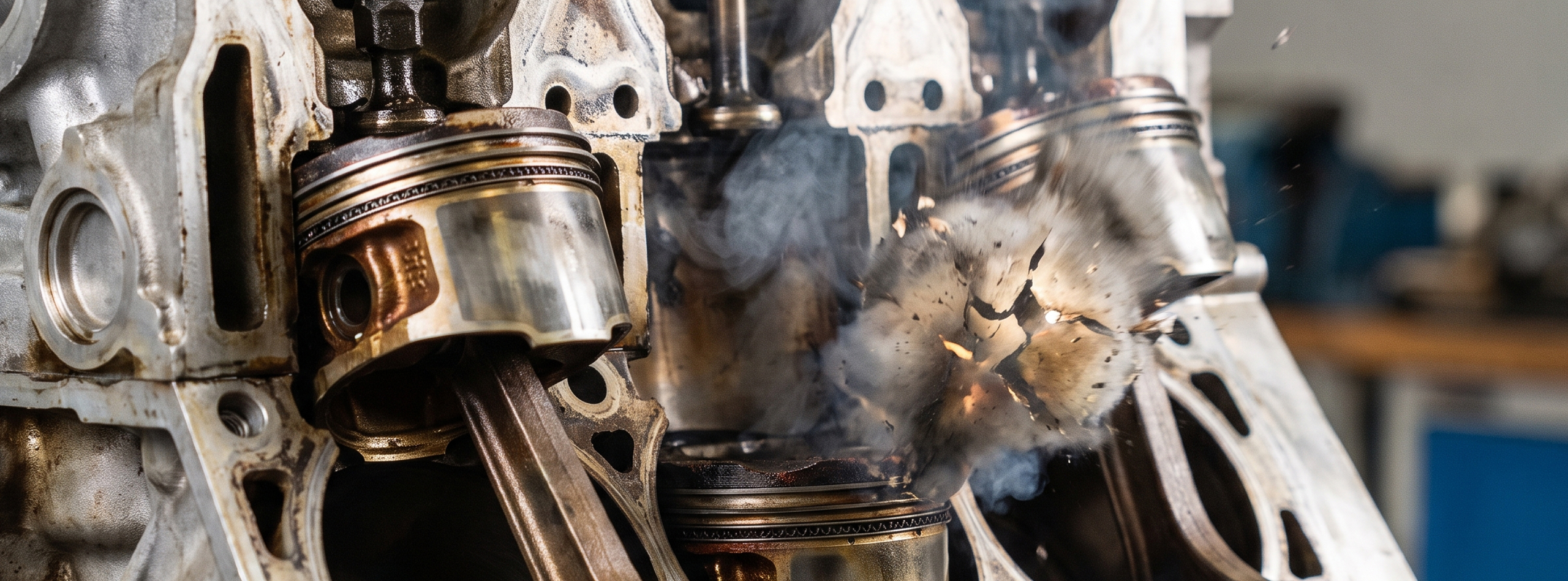
LSPI can create extreme combustion pressures capable of damaging critical engine components in a very short period of time.
Potential LSPI-related damage may include:
- Cracked or damaged pistons
- Holes in the piston crown
- Broken piston rings or ring lands
- Bent or broken connecting rods
- Connecting rod bearing damage
Because these failures can lead to expensive repairs or even complete engine failure, preventing LSPI before it occurs is essential for modern turbocharged engines.
How Can LSPI Be Prevented?
Although LSPI is a complex phenomenon, several practices can help reduce the risk:
- Use the Correct Engine Oil Specification: Using a high-quality engine oil formulated for modern gasoline engines is one of the most important steps in LSPI protection. Advanced lubricants are designed to help control deposits, maintain cleanliness, and provide protection under severe operating conditions.
- Follow Fuel Recommendations: Using the fuel octane rating recommended by the vehicle manufacturer helps support proper combustion performance and engine operation.
- Maintain Engine Cleanliness: Regular maintenance helps minimize deposits and contaminants that may contribute to abnormal combustion conditions.
Why Do API SQ and ILSAC GF-7A Engine Oils Help Protect Against LSPI?
The latest API SQ and ILSAC GF-7A specifications were developed to address the demanding requirements of today’s advanced gasoline engines, including improved protection against Low-Speed Pre-Ignition.
Engine oils meeting these specifications must pass industry-standard LSPI testing, including evaluation of their ability to help reduce LSPI events under demanding operating conditions.
These advanced lubricants use optimized additive technology designed to:
- Help control harmful deposits
- Improve engine cleanliness
- Maintain protection throughout the oil service interval
- Support durability in modern turbocharged gasoline engines
By meeting API SQ and ILSAC GF-7A requirements, engine oils demonstrate their ability to help protect against abnormal combustion and the severe damage associated with LSPI.
Ultra1Plus LSPI Protection
Ultra1Plus offers a broad range of advanced engine oils meeting the latest API SQ and ILSAC GF-7A specifications, engineered to help provide LSPI protection for today’s high-efficiency turbocharged gasoline engines.
Through modern lubricant technology and advanced additive formulations, Ultra1Plus oils help deliver the cleanliness, durability, and protection required by today’s demanding engine designs.
Whether operating under daily driving conditions or high-load performance demands, Ultra1Plus is committed to helping drivers protect their engines with advanced lubrication solutions designed for modern automotive technology.