
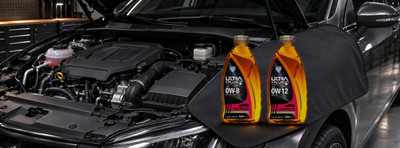
Does Your Engine Need 0W-8 or 0W-12? 4 Ways to Know
0W-8 and 0W-12 are the thinnest motor oils you can buy for a gasoline engine. They're also among the hardest to find on a store shelf. So when your engine calls for one, you want to be sure before you go looking.
Short answer: your owner's manual tells you whether your engine takes 0W-8 or 0W-12, and many engines also print the grade on the oil fill cap. 0W-8 is the thinner of the two (4.0 to under 6.1 cSt at 100 °C under SAE J300, versus 5.0 to under 7.1 cSt for 0W-12). Use only the grade your engine calls for.
The good news: you don't have to guess. Here's what these grades are, four ways to confirm what your engine needs, and what to do if you can't find it.
Part 1: What 0W-8 and 0W-12 are
What makes them different? Both are ultra-low viscosity grades from the SAE J300 standard. The "0W" means they flow like a 0W oil on a cold start. The second number is the viscosity at operating temperature: 8 is thinner than 12, and 12 is thinner than 16 and 20.
Why do they exist? Automakers use them to cut internal friction and support fuel efficiency. You'll see them in select modern, high-efficiency gasoline engines, including some turbocharged ones and some hybrids.
Why they need care: engines built for these grades are designed around a very thin oil. Using them where they don't belong, or skipping them where they do, works against how the engine was built.
Thinner isn't automatically better. A 0W-8 or 0W-12 in an engine that wasn't designed for it doesn't automatically bring more efficiency or better protection. The benefit only exists in the engines these grades were made for.
What SAE J300 doesn't tell you. SAE J300 classifies viscosity. On its own, it doesn't decide whether an oil is right for an engine: the oil also has to meet the engine's performance requirements and the approvals your owner's manual lists.
Part 2: Four ways to check your grade
1. Your owner's manual. Look in the maintenance or specifications section. It lists the oil grade, and sometimes a backup grade. This is the source to trust first.
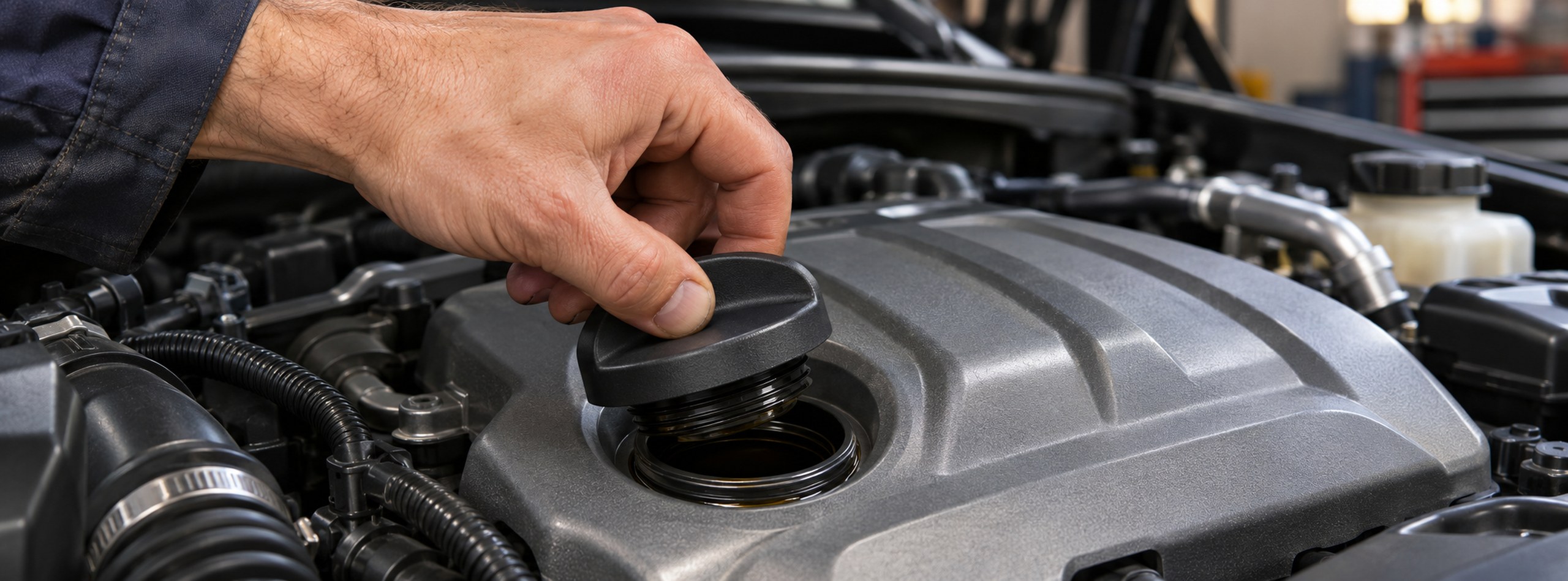
2. Your oil fill cap. Many newer engines print the grade right on the cap under the hood. It takes ten seconds to check.
3. Your dealer or service shop. Give them your VIN. They can look up the exact grade and capacity for your engine.
4. Your last service invoice. It usually lists the oil that went in. Use it as a clue, not a final answer: confirm it matches the manual, because a shop may have used whatever was on hand.
Proof it matters: the gap between grades is real. Under SAE J300, a 0W-8 can be as thin as 4.0 cSt at 100 °C, while a 0W-20 starts at 6.9 cSt. That's a big difference for an engine tuned to one of them. For reference, our Ultra1Plus SAE 0W-8 measures a typical 5.2 cSt at 100 °C on its product data sheet.
Part 3: What to do if you can't find it
When stores are out: ultra-low viscosity oils have been hard to source at times. If you can't find your grade, ask your dealer what they approve as a backup before you buy something thicker.
Why not just go one grade up? Some manuals allow it, many don't. A thicker oil moves the engine away from what it was designed for and can cost fuel efficiency. Our article on using 0W-16 instead of 0W-8 covers this exact situation.
Example: a shop that services newer, high-efficiency cars keeps a few cases of each thin grade on hand, so a customer never leaves with the wrong oil because the right one was out.
Frequently asked questions
Can I use 0W-12 instead of 0W-8?
Only if your owner's manual or dealer says it's acceptable. Otherwise use 0W-8.
Are 0W-8 and 0W-12 only for hybrids?
No. You'll find them in select high-efficiency gasoline engines, some turbocharged, and in some hybrids. Your manual is the final word.
Are these oils full synthetic?
In practice, yes. Ultra1Plus SAE 0W-8 and SAE 0W-12 are full synthetic.
What happens if I put 0W-20 in an engine that calls for 0W-8?
The engine will run, but it isn't running on the oil it was designed for, and you can lose some of the efficiency it was built for. Change back to 0W-8 as soon as you can.
Why are 0W-8 and 0W-12 harder to find than 0W-20?
Fewer engines call for them today, so many stores carry less of them. Shops that service newer, high-efficiency engines often keep their own stock.
Does the grade change with the season?
Not for these grades. The "0W" rating already covers cold starts, so the grade in your manual applies year-round unless the manual says otherwise.
Keep reading
To understand the numbers in more detail, read 0W-12 vs 0W-20: Why One Number Changes What Your Engine Needs.
Ultra1Plus blends SAE 0W-8 and SAE 0W-12 full synthetic motor oils in the USA. See the 0W-8 guide and the 0W-12 guide, and check each product's data sheet for the specifications it meets.
Run a shop or a fleet? Open a B2B account to order by the case or pallet and keep these grades in stock.